Home › What Is Onigiri?
The onigiri guide
What Is Onigiri? A Complete Guide to Japanese Rice Balls
Onigiri (pronounced oh-NEE-gee-ree) are Japanese rice balls: cooked rice hand-shaped into a triangle, oval, or round, packed with a savory filling, and wrapped in nori seaweed. Common fillings include salmon, tuna mayo, Spam (as in Spam musubi), umeboshi (pickled plum), kombu, and teriyaki chicken. Onigiri is not sushi — sushi uses vinegared rice and often raw fish, while onigiri uses plain cooked rice with fillings that are cooked, cured, or pickled, never raw. Most onigiri are 200 to 350 calories each, so one makes a snack, two a satisfying lunch, and three a full meal. Onigiri have been a Japanese staple for over a thousand years. In the United States you can find them at Japanese supermarkets, specialty shops, and dedicated onigiri restaurants like OniGuru, which hand-presses onigiri daily at three Orange County locations.
By OniGuru · Updated September 2, 2026
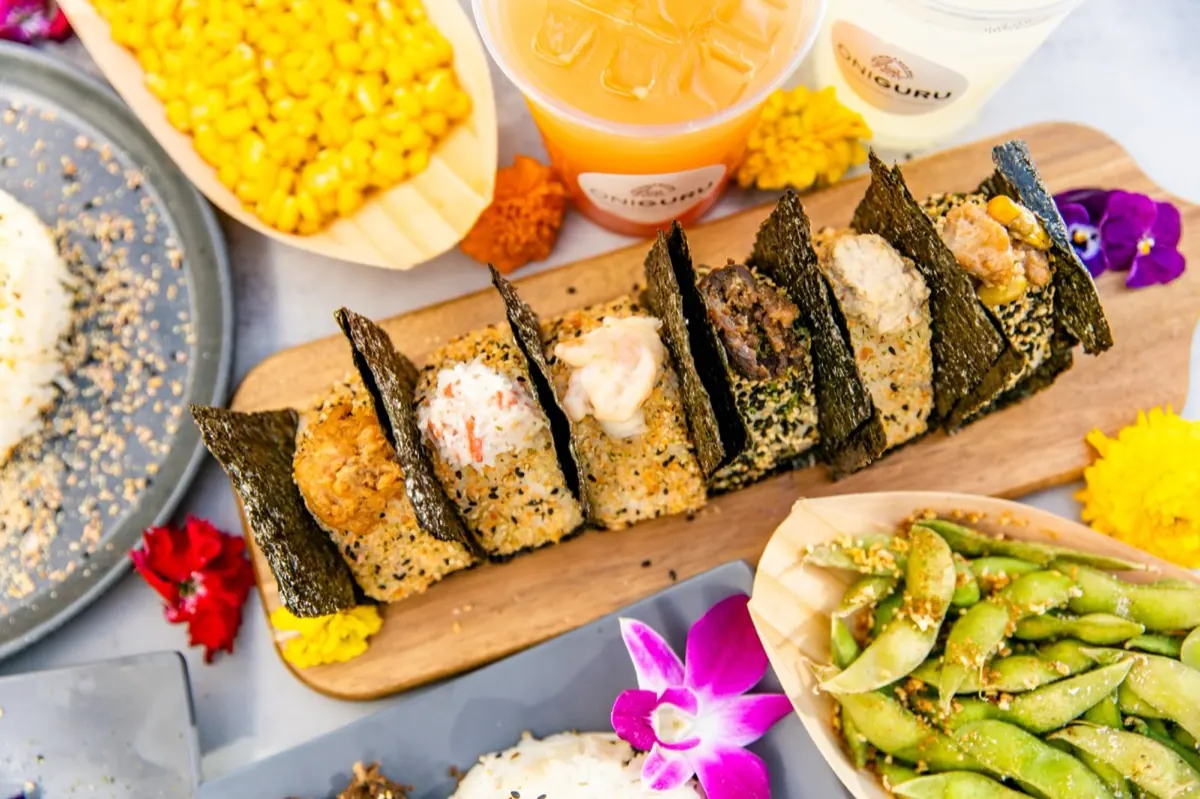
Onigiri, defined
Onigiri are Japanese rice balls — hand-shaped cooked rice packed with a savory filling and wrapped in nori seaweed. Rice, filling, nori: three ingredients, one technique, a thousand years of practice. It's Japan's everyday food, eaten with your hands like a sandwich — built for desks, hikes, beach mornings, school pickups, and road trips.
Pronunciation: oh-NEE-gee-ree.
Is onigiri sushi? Is it raw?
No on both counts. Sushi uses vinegared rice and often raw fish. Onigiri uses plain cooked rice, and the fillings are cooked, cured, or pickled — never raw. That makes onigiri one of the most approachable ways into Japanese food: no rolls, no surprises, all flavor.
What is onigiri filled with?
Common fillings include salmon, tuna mayo, Spam (as in Spam musubi), umeboshi (pickled plum), kombu, teriyaki chicken, and veggie mixes for vegan options.
At OniGuru, six flavors are pressed by hand every morning — from Vegan and Crab to the bestseller, Salmon. See them all on the menu.
How onigiri is made
Every onigiri at OniGuru is pressed by hand — triangle, oval, or round — with the filling pressed inside, then wrapped in nori at the moment you order. That's why the nori stays crisp. Rice is cooked to texture each morning; onigiri are never machine-formed.
Calories, vegan & gluten-free
- Calories: most onigiri are 200 to 350 calories each, depending on filling.
- Vegan: some onigiri flavors are vegan. At OniGuru the vegan options are the Vegan Onigiri and the Vegan OniGuru Rice Bowl.
- Gluten-free: most onigiri are naturally gluten-free. Watch for soy sauce in some fillings like teriyaki chicken.
How many onigiri should I eat?
One onigiri is a snack. Two is a satisfying lunch. Three is a full meal.
Where to buy onigiri in the United States
Japanese supermarkets, some specialty shops, and dedicated onigiri restaurants like OniGuru in Orange County, California. OniGuru hand-presses onigiri daily at three counters: SteelCraft Garden Grove, Mercantile West Ladera Ranch, and The Shops at Mission Viejo.